


ERP Food
ERP Software for the Food Industry: When Everything Needs to Work Together
As a food company, you want everything to work together seamlessly: from purchasing and inventory to production, logistics, and sales.
With ERP solutions from Logres, you gain immediate insight, reduce the risk of errors, and create room for growth.


 ERP Food
Food industry requires specialized ERP package
The Dutch food sector is large and multifaceted, with international players, strict quality standards and complex production methods.
Looking for an ERP partner that really understands your sector? Logres Business Solutions is located in the heart of the Foodvalley and has extensive experience with ERP food.
We speak the language of the industry and help make your processes clearer and more efficient. With proven solutions, we provide systems that hold up today and grow with your business.
A solution for every challenge
Challenges that food producers face every day
Our ERP solutions help tackle them smartly and efficiently.

How an ERP system supports your food business
Whether you’re dealing with perishable products, complex logistics, or rapidly changing inventory levels, a good ERP system for the food industry helps you stay in control. SAP Business One is the ideal solution for many food producers. By consolidating processes such as purchasing, inventory management, production, sales, and financial administration into a single system, you can work faster, with fewer errors, and much more efficiently.
You get real-time insight into your inventory, avoid waste, automate manual operations and more easily meet quality requirements or audits. Moreover, you will be more flexible towards customers and ready for growth.
6 times choosing Logres
How we make the difference
This is why food companies choose Logres as their ERP partner.
1.
More than 30 years of experience
300+ successful implementations.
2.
Implementation with your company in mind
Your processes secured in a system that works for you.
3.
Committed consultants with expertise
Experienced people who know the package inside and out.
4.
Pragmatic approach and Dutch sobriety
Short lines and a pleasant cooperation.
5.
Complete support from A to Z
We keep it clear and manageable.
6.
Continuous support and optimization
We remain available even after the go live date.
 Functionalities
Modules for ERP food
With the right modules, tailor your ERP system to what you need. From inventory management to quality control, you work faster, avoid errors and keep an overview.
Financial management
Financial administration fully integrated with your purchasing, sales and logistics processes. From general ledger and invoicing to accounts receivable and accounts payable: SAP Business One provides insight into your finances.

Expiration date
SAP Business One ensures that the THT date is linked to every product coming off the conveyor belt. Products or ingredients that do not meet the THT date are blocked.
Documentation and ingredient lists
This module ensures that all your products have correct labels and wrappers. The ERP system automatically compiles them according to the EU directives in force, so that you are always compliant.
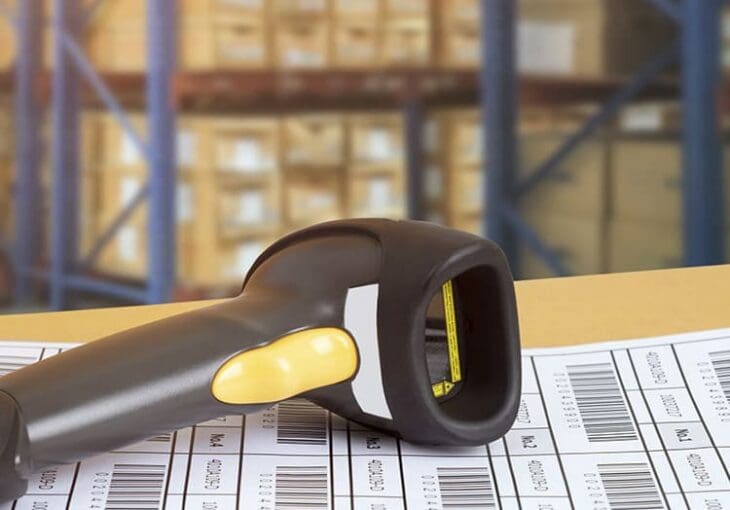
Track & Trace / Barcodes
Just because there are so many demands on the quality and safety of your products, making your product traceable is hugely important. We also have a solution for scanning and reading barcodes.
Certifications
Certifications play a major role in the food sector. The logo may only appear on packaging if all links in the chain comply with it. With an ERP system that shares chain data, you guarantee this easily.
CRM & customer management
Anytime, anywhere insight into customer data is crucial for sales managers, but also for support staff and others in your company who have regular customer contact.
 Schedule a team meeting
Call of 15 minutes
Quick answer to your question

 A solution for every challenge
Find out what good ERP food software can do for your food company.
 Knowledge base
Blogs and articles about ERP food
Have this page read aloud
Do you work in the food industry? Then you need ERP for the food industry with specific functionalities. It is important that you choose a partner that has experience in your sector and understands the issues in your world.
Loogres Business Solutions has been implementing ERP systems at food companies for almost 30 years. We know the challenges and risks you face every day. We understand your business and speak your language The starting point is: deliver the ideal ERP package to what you need.


Frequently Asked Questions About ERP for the Food Industry
What is the best ERP for the food industry?
The short answer: there is no one "best" ERP for the food industry. It depends on your ambitions, your processes and how flexible you want to be in the future.
In this article, we explain what to look for, what choices you have and why many food companies end up with a solution like SAP Business One - often in combination with an experienced partner like Logres.
What is an ERP system for the food industry?
An ERP system brings together purchasing, production, quality control, inventory, sales, and administration in a single environment. Each batch of raw materials that comes in is assigned its own history within the system: where it came from, which batch it was processed in, and which customer ultimately received the final product.
That’s different from an accounting package with a production module tacked on. A food company works with products that spoil, vary in composition, and must meet strict requirements. The software needs to take that into account.
How does ERP software for the food industry differ from a standard ERP package?
Most ERP systems are designed for the manufacturing industry and operate on a bill of materials basis: three components combine to form a single product. The food industry, on the other hand, operates on the basis of recipes and yields, where 800 kilograms of raw materials yield approximately 750 kilograms of finished product, depending on the yield.
On top of that, batches, best-by dates, allergens, and quality approvals aren’t just extras in the food industry—they’re at the heart of the process. A system that doesn’t have these features built in rarely manages to incorporate them effectively through customization.
How does an ERP system ensure traceability and a quick recall?
In the event of a recall, the question is simple and the time pressure is high: where has this batch gone? Because every receipt, production step, and delivery is linked to a batch number, that chain can be traced in both directions. From the customer back to the supplier, and from a suspect raw material forward to all orders in which it was used.
In practice, that’s the difference between generating a list in just a few minutes and spending an entire afternoon searching through Excel and paper packing slips.
Can an ERP system track expiration dates and FEFO?
Yes, and that’s exactly where many broader packages fall short. In the food industry, shelf life isn’t just a field to fill out for the sake of it—it’s something that changes along with inventory.
A well-designed system automatically dispatches the batch that expires first, alerts you when a batch is nearing its best-by date, and takes into account the remaining shelf life required by a customer under contract when making a sale. This helps you avoid both customer rejections and inventory sitting in your own cold storage and expiring. Read more about this in the article on managing shelf life.
How does an ERP system handle recipe management and cost pricing?
Recipes are stored in the system along with their ratios, tolerances, and alternative ingredients, in versions that are retained. If a supplier or purchase price changes, you can immediately see how that affects the cost price of the final product.
Because production, scrap, and yield are recorded for each batch, you can perform a post-production cost calculation: not what a product should cost, but what it actually cost that week. The ingredient lists and allergen information for specifications and labels are also generated from the same recipe.
Does an ERP system help with certifications such as BRC, IFS, HACCP, or Skal?
An audit is primarily about providing evidence. Samples, approvals, temperature logs, deviations, and corrective actions should be documented as they occur, not reconstructed afterward from a folder full of forms.
If those records are in the same system as production and inventory, then a blocked batch truly cannot be shipped. An auditor then sees not just documentation of the process, but the process itself. That’s how quality control works.
Is this type of software also suitable for my industry?
Meat, dairy, fresh produce, bakery and pastry, snacks, beverages, frozen foods, ingredients, and supplements: they may seem very different, yet the questions boil down to the same thing. Which batch, at what temperature, with what shelf life, and at what cost?
The difference lies in the setup. Catchweight and cutting for meat, standardization and ingredients for dairy, grading and quality classes for produce, dough processes and daily fresh planning for bakeries. That’s the work of a partner who knows the industry, not just a module you check off a list.
Can a single system handle both production and sales and distribution?
Many food companies both produce their own products and resell them. In that case, you don’t want two systems linked together—you want a single inventory system where your own production batches and purchased batches are listed side by side.
On the distribution side, this requires customer-specific pricing agreements, volume discounts, and promotions, as well as batch-based order picking, multiple warehouses, and delivery per trip. On the production side, it requires planning based on orders, available raw materials, and the actual capacity available that week.
What types of integrations are possible with machines and other systems?
Scales, label printers, warehouse scanners, a laboratory system, EDI with retailers, an online store, or transportation planning: these systems exchange data with the ERP system whenever it makes sense to avoid entering the same information twice.
The rule of thumb is straightforward: integrate what’s used on a daily basis and leave the rest for now. Examples include labeling directly from the system and an integration with a LIMS.
For what size of business is ERP for the food industry a good fit?
That threshold is often expressed in terms of the number of employees, but the real issue is something else entirely. As soon as traceability is handled in Excel, scheduling is managed solely in one person’s head, and the cost price only becomes clear once the quarterly figures are in, that threshold has already been crossed.
A company with fifteen employees and demanding customers may therefore benefit more from a full-featured system than a company with eighty employees and simple processes.
How long does an ERP implementation take in the food industry?
Expect the process to take months rather than weeks. What determines the turnaround time isn’t the software, but the number of locations, the number of integrations, and—above all—the number of exceptions a company wants to retain. Every “yes, but we do it differently here” takes time, and sometimes the answer is that it does indeed have to be done differently.
It helps to document your own processes on paper before making a selection. The article on switching ERP systems outlines the step-by-step plan and the pitfalls.
