Best ERP Software for Food Companies (Including Customer Testimonials)

Which ERP system is right for a food company?
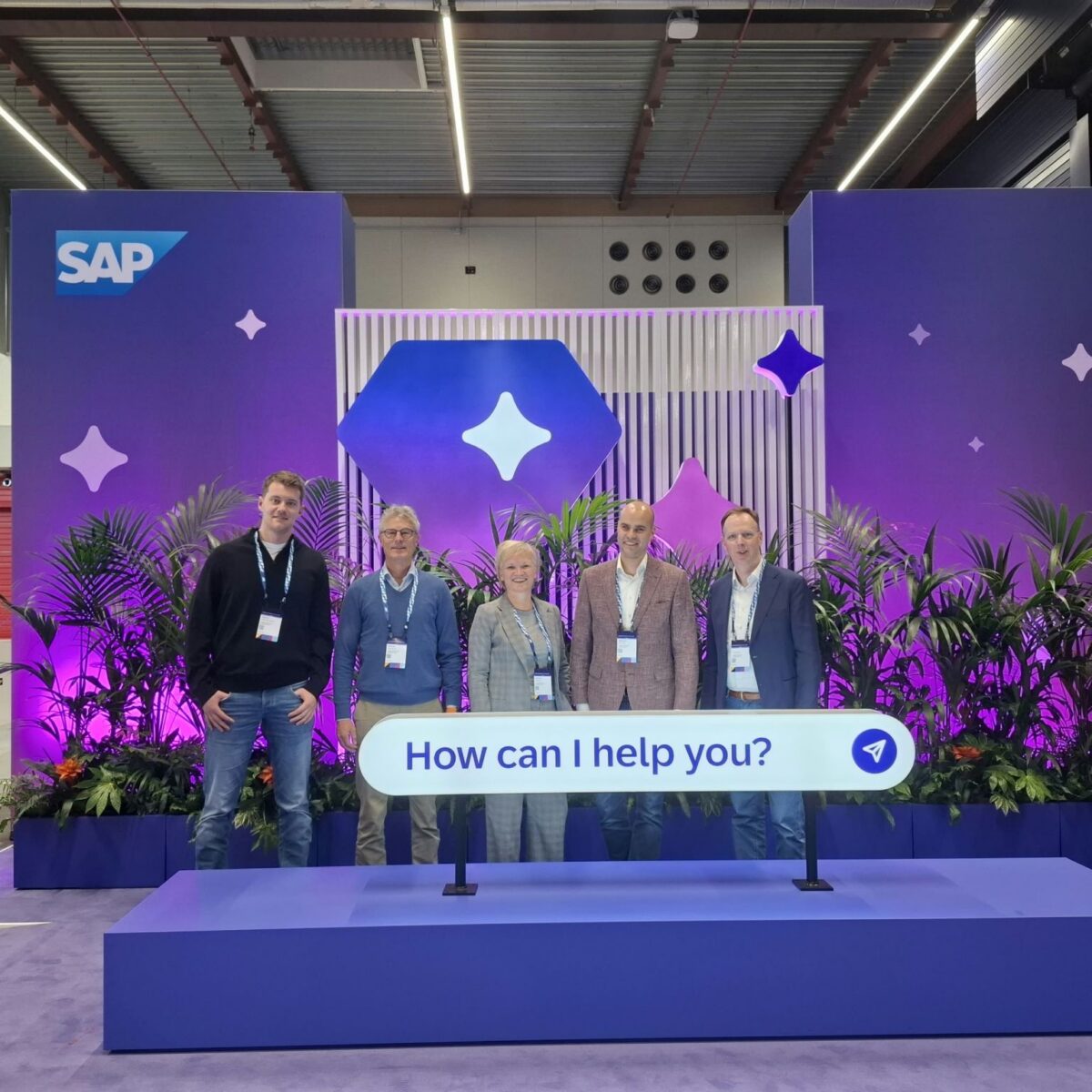
For small and medium-sized food companies, SAP Business One may well be the best ERP solution. In this article, you’ll learn why that’s the case—and just as importantly, which food companies are the exceptions to that rule.
This isn’t just a claim. Below, two food companies—a manufacturer and an importer—who have already gone through this process share their experiences in their own words.
First, the criteria. For a food company, choosing an ERP system comes down to five things: traceability of batches all the way back to the raw materials; shelf life that updates in real time with inventory; recipes that account for yield and variable weight; allergens and nutritional values that are automatically included on the label; and a vendor who understands the industry.
The food industry has different requirements than the rest of the process industry. It’s not about concentrations and hazardous properties, but rather best-by dates, ingredient declarations, and a customer who requests traceability even while the truck is already at the dock.
One question almost always splits the choice in two: does the company handle in-house production, or is it focused on trading and distribution?
A manufacturer needs recipes and yield data, while a trading company needs batch information and price agreements. A system that does a half-decent job of both may not stand out during a demo, but it certainly will after a year.
If a company handles its own production, Dutch small and medium-sized businesses (SMEs) have two options: SAP Business One with process industry functionality, or Microsoft Dynamics 365 Business Central with a food solution such as Foodware 365 or YAVEON.
On paper, the two are quite similar. The difference is that the food functionality in SAP Business One runs on the same data model as the rest of the suite, whereas a Business Central implementation stands or falls on the food layer provided by a third party and on the party that maintains that layer. Having one fewer vendor in the chain makes a difference with every update.
Next are the industry-specific packages. Aptean Food & Beverage, CSB-System, and Infor offer a lot out of the box, but generally only become worthwhile for larger-scale operations.
What about the exceptions to the rule? A processor with its own production lines, multiple locations, and hundreds of employees is often better off with an industry-specific solution such as CSB-System or Infor, which is built to handle that scale.
Companies that focus purely on trading and don’t manufacture anything themselves are better off with a wholesale solution like Klipboard Wholesale than with a manufacturing solution where half the features are never used. And a company that’s already fully integrated into the Microsoft ecosystem with an established partner can just as easily succeed with Business Central and a food-specific solution.
Comparison: ERP Software for the Food Industry
Nine software packages compared side by side, based on the features that make a difference in the food industry.
| Software | Batch, Best-Before Date, and FEFO | Recipes with Yield and Variable Weight | Allergens and Labeling Information | Retail and manufacturing in a single inventory system | Ideal for Small and Medium-Sized Businesses |
|---|---|---|---|---|---|
| SAP Business One with process industry functionality | Yes | Yes | Yes | Yes | Yes |
| Dynamics 365 Business Central with a food industry solution | Yes | Yes | Yes | Yes | Yes |
| Aptean Food & Beverage ERP | Yes | Yes | Yes | Strong in Production | Medium-sized and larger |
| CSB-System | Yes | Yes | Yes | Strong in data processing | Designed for larger processors |
| Infor CloudSuite Food & Beverage | Yes | Yes | Yes | Yes | Starting at the upper end of the mid-range |
| Exact | Partly | Not standard | Not standard | Yes | Yes |
| AFAS | Partly | Not standard | Not standard | Partly | Yes |
| Odoo | Yes | Partly | Not standard | Yes | Yes |
| Klipboard Wholesale | Yes | Not applicable | Partly | Retail Only | Yes |
Based on publicly available product information, September 2026. Vendors continue to develop their products, so always verify the features that are critical to your process in a demo using your own items.

Please note: sometimes you don’t encounter these issues until during the implementation process
A demo can show you anything. The real challenges usually only come to light once the system is configured with your own products, your own recipes, and the requirements of your own customers. These are the six issues that most often cause delays.
What may seem like a minor detail during a demo is often exactly the point where a project falls through during implementation.
- Shelf life is recorded, but the system doesn’t manage it. Any software package can enter a “best-by” date. It’s only during setup that it becomes clear whether the system actually dispatches the batch that expires first, and whether it blocks an order for a customer who requires at least two-thirds of the remaining shelf life.
- Yield doesn’t fit into a bill of materials. Eight hundred kilograms of raw materials yield approximately seven hundred fifty kilograms of finished product. A system that thinks in terms of bills of materials doesn’t account for that difference, and halfway through the process, it turns out that the cost price makes no sense.
- Variable weight causes issues between the order and the invoice. A piece of cheese or a box of fish is shipped individually but invoiced by the kilogram. If that doesn’t fit into a single order line, it requires manual intervention or customization.
- Allergen information is stored in a separate document. If an ingredient changes, the allergen profile changes, and with it, the label. If that information isn’t included in the recipe, every recipe change requires a search through folders.
- A blocked batch ends up in a picking order anyway. Recording that a batch hasn’t been released yet is different from preventing it from being shipped. You only notice that difference when something goes wrong.
- Traceability is in place, but it doesn’t close the loop. Being able to search forward and backward isn’t enough: during a BRCGS audit, the mass balance must also add up. The four-hour window for this isn’t a legal requirement, but it is the standard that auditors apply in practice.
These are all points you can ask about in advance. It will save you months of work later on.
Two food companies that have gone before you
Two companies that have already gone through this process, both in the food industry but with very different operations: one manufactures its own products, while the other imports and distributes them.
Kivits: Get Your Internal Operations in Order First
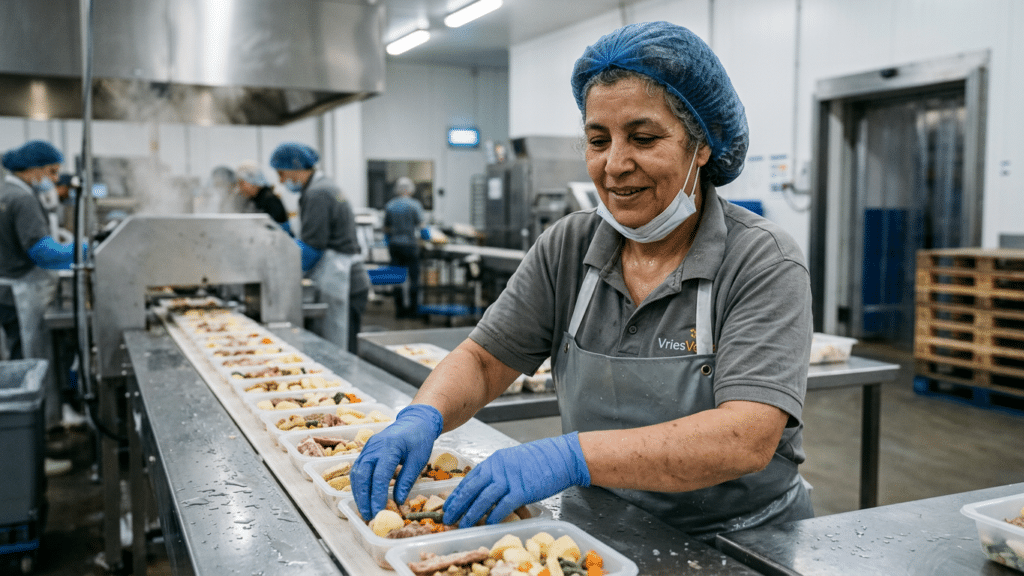
Kivits has been a producer and wholesaler of fresh and frozen specialties for sixty-five years. What began as a family business has grown into multiple operating companies with their own production facilities and about eighty employees.
SAP Business One had been in use there since 2009. The company that managed the system was acquired a few times, and with each acquisition, the personal touch disappeared: “With all due respect, I’ve never actually seen some of those companies, except on the invoice.”
After the switch, the focus was initially on the time-consuming daily tasks. Intercompany transactions were one of them. “We used to have to retype an entire intercompany invoice with two or three hundred lines. Now it takes just a few seconds.”
The focus is now shifting to production and quality.
“We have better control over our finances, the sales team can collaborate more effectively, and our quality department also has faster access to the right information. SAP Business One really opens new doors in every area.”
Henk Meiderwijk, Director at Kivits
Engel Foreign Food: 20,000 pallet spaces under control
Engel Foreign Food supplies international food products in the Netherlands and beverages and snacks throughout Europe. Thirty years ago, instant noodles and aloe vera drinks were a rarity in supermarkets; now they can be found almost everywhere.
Nothing is produced in-house here, so the complexity lies in the warehouse and order processing. Since 2013, the company has been using Klipboard Wholesale, with a warehouse system added later.
In a warehouse with over twenty thousand pallet spaces, that saves a lot of time spent searching.
“The new system now provides detailed insight into our inventory locations and reduces errors in order processing.”
Rutger ten Feld, business analyst at Engel Foreign Food
Wondering what’s right for your situation?
Logres’ ERP consultants work with food companies every day—from importers and distributors to manufacturers with their own recipes. Feel free to discuss your situation with us.
Which implementation partner should you choose?
What matters most in practice isn’t covered in any comparison. It’s whether the people on the other side of the table understand how a food company operates: why a shipment is on hold, why a retailer is being difficult about a date, and why that one exception really does matter.
As a result, two companies using the same software package can have completely different experiences. It’s therefore worth comparing not only the software itself, but also the provider who will implement it.
Logres has been doing this for over thirty years now, working exclusively with wholesalers and manufacturers in the process industry. Within this sector, the food industry is not a side venture but one of the core sectors, ranging from importers with full-scale cold storage facilities to manufacturers with their own recipes.
That makes a big difference in the discussions. A consultant who knows the industry doesn’t need to be told what FEFO means or why a customer requires a minimum remaining shelf life. Instead, they ask the questions you hadn’t even thought of yourself—and at the end of the day, that carries more weight than a few feature points in a comparison.
Read more
- Batch Management: Controlling Quality and Inventory
- Managing Shelf Life with SAP Business One
- Keep track of allergens
- Quality Control: From Sample to Approved Batch
- Product revisions: every recipe change is traceable
- Switching ERP Systems: A Step-by-Step Guide and Pitfalls
- Best ERP Software for the Chemical Industry